Hiking Tugela Falls is not just a hike — it’s one of those rare experiences that reminds you why you lace up your boots in the first place.

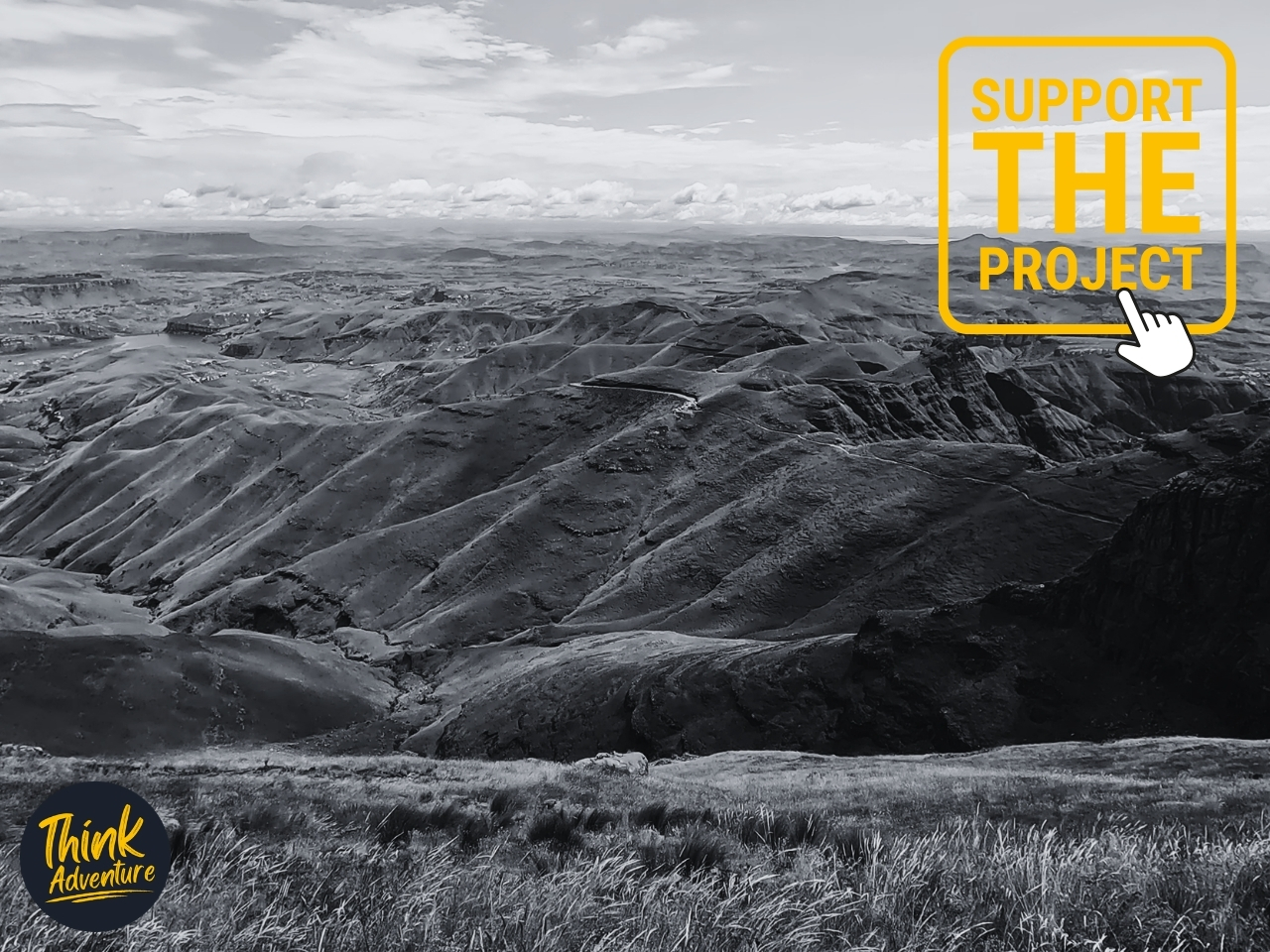
Standing at the edge of the Drakensberg Amphitheatre, looking down at nearly a kilometer of sheer cliff face with the Tugela River threading silently far below, you’ll understand why this place stops people in their tracks. Tugela Falls drops 948 meters, making it Africa’s highest waterfall and the world’s second highest—with a legitimate ongoing debate that it may in fact be the tallest on Earth. It sits within the Royal Natal National Park, part of the UNESCO-listed uKhahlamba-Drakensberg Park, one of South Africa’s most celebrated natural landscapes.
This is not a casual Sunday walk. The trail covers approximately 12 to 14 kilometers round trip, starting at Sentinel Car Park at 2,500 meters above sea level and climbing to roughly 3,000 meters—navigating chain ladders, exposed ridges, and the full unpredictability of Drakensberg weather. But the reward at the top is worth every meter of effort.
For the full story of how my hike actually played out, read: Tugela Falls: The Hike That Tried to Break Us (And Almost Did). What follows is everything I wish I had known before I went — and what you need to know before you do.
The Essentials: What You Need to Know Before You Go
Getting there isn’t complicated, but it does require some planning. Here’s the short version:
Starting point: Witsieshoek Mountain Lodge, approximately 1 hour from Harrismith on the N3. If you’re coming from Pretoria, budget around 4.5 to 5 hours of driving.
Getting to Sentinel Car Park: The last 7 kilometers of the access road is a rough dirt track—4×4 only. You can drive yourself if you have a 4×4, but be warned: it is genuinely rough and has been known to damage vehicles not suited to it. If you don’t have one, a 4×4 shuttle operates from the lodge to Sentinel Car Park for approximately R225 return. The drive takes about 40 minutes. Book this in advance through the lodge.
Permits and fees: Expect to pay a hiking permit fee of approximately R90 per person (cash) at Sentinel Car Park, plus a Royal Natal National Park entrance fee of around R70 per person. You’ll also need to sign the hiking register before you set off and again on your return—they track this deliberately. Allow time before departure to get all of this sorted, and take a complimentary coffee at the lodge while you’re at it.
Accommodation: Witsieshoek Mountain Lodge is the obvious base and offers everything from hiker cabins to chalets. If they’re full—and they do fill up, you can look towards Rustplaas Guest Farm near Fouriesburg, a solid alternative. About 40 minutes from Clarens, it offers proper beds, warm showers, and WiFi. Accommodation around Clarens is also worth considering when there are no events in the area.

Day hike vs. overnight: The total distance from beginning to end is between 12 and 14 kilometers depending on what route you take to the top. You can absolutely complete it as a day hike, but the overnight experience is worth it if you’re comfortable backpacking. Waking up on the escarpment is something to admire. Just come prepared for the weather.
The Chain Ladders: Don’t Overthink It, Just Don’t Let Go

The chain ladders are the headline act of the Tugela Falls trail—two sets of fixed chains taking you up roughly 40 meters of near-vertical rock face. They sound terrifying. They’re manageable. Here’s what helps:
Three points of contact, always. Two hands, one foot—or two feet, one hand. Move one limb at a time and you’ll be fine.
Backpack stays on. Yes, it throws your balance. No, there’s no other option. Tighten your straps before you start so nothing shifts mid-climb.
Let others go first if you need a moment. There’s no shame in watching someone else do it before you commit. Use the time to figure out your foot placements.
Wind changes everything. A calm day on the ladders is straightforward. A windy day is a different conversation. Take it slow, keep your body close to the rock face, and don’t rush.
Coming down is trickier than going up. Face the rock on the way down; the same rules apply—three points of contact, no rushing.
Worth noting: if the chain ladders feel like a hard no, there is an alternative. The Kloof Gully route is physically more demanding — a steep, narrow scramble over rocky boulders — but avoids the emotional challenge of the ladders entirely. It adds roughly an extra half hour each way and about 100 meters of additional ascent and descent. Both routes get you to the top; it’s simply a matter of which challenge you’d rather take on.
The ladders also make for great photos, so if someone in your group is ahead, make peace with the fact that your awkward climbing face will be documented forever.
When to Go: The Weather Will Do What It Wants, But Here’s How to Play the Odds

The Drakensberg is notorious for afternoon thunderstorms, particularly in summer. Here’s a simple breakdown:
Best months: Late autumn to early winter (April to June) and late winter to early spring (August to September) offer the most stable conditions—clear skies, cooler temperatures, and far less chance of the kind of overnight storm that nearly claimed our tents. March to May is widely considered the best time, when the rains have subsided, temperatures are comfortable, and the hills are still a lush green.
Summer (November to February): Warmer, greener, and dramatic — but afternoon thunderstorms are almost guaranteed. If you hike in summer, start early and aim to be at camp well before midday. One practical note: in summer the falls are in their full gushing glory, but that is also when you are more likely to have rain affect your hike.
Winter (June to August): Cold nights on the escarpment. Freezing cold. Pack accordingly—snow is possible, and in a hard winter the falls can dry up to very little or even nothing. The days, however, are often clear, and the air is crisp—ideal hiking conditions if you gear up properly.
Whatever season you go: Check the forecast obsessively in the days leading up to your hike, and check it again the morning you leave. Then accept that the mountain will do what it wants regardless.
A poncho, it turns out, is not the answer. A good rain jacket, waterproof pack cover, and dry bags for your sleeping gear will serve you far better. Lesson learned the hard way so you don’t have to.
What to Pack: 17kg Edition (And What I’d Do Differently)
I carried 17kg up that mountain. By the end, I knew exactly what was necessary and what was wishful thinking. Here’s an honest breakdown:
The non-negotiables:
- Trail running or hiking boots—whichever you prefer, either works
- Trekking poles—your knees will thank you on the way down. (Personal note: I didn’t use them much on the descent. Sometimes they just get in my way and I move better without them.)
- Headlamp with spare batteries
- Sleeping bag rated for sub-zero temperatures—even in mild seasons, it gets cold up there
- Tent with good wind resistance—and practise putting it up before you go
- Rain jacket (not a poncho — trust me on this one)
- Waterproof pack cover
- Dry bags for sleeping bag and spare clothes
- Water filter or purification tablets—there’s fresh mountain water available, but always treat it
- First aid kit
- Warm layers, including a beanie and gloves
Food and water:
- Just-add-water meals are your best friend—light, easy, hot
- High-energy snacks: nuts, biltong, salami sticks, macadamia nuts for slow-release
- A small gas stove and lighter (keep the lighter somewhere dry and accessible)
- At least 2 litres of water capacity
What I’d leave behind next time:
- The poncho. It has earned a permanent spot in the gear rack, and I don’t see myself using it again.
- Anything is justified with “just in case. “If you haven’t used it in three previous hikes, it stays home.
The golden rule of backpacking:
If you’re unsure whether to take it, discuss it with your guide or more experienced hikers first. The right answer depends heavily on where you’re hiking. Where you can save on weight, do it. Your back will be grateful for 3km up the mountain.
Final Thoughts
Hiking Tugela Falls will test you. It might throw cold rain at you, wind that wants to peel you off the rock face, and a backpack that feels heavier with every switchback. The mountain keeps no promises.
But here’s what it will also do: it will put you on top of the world—literally. You’ll stand at the edge of one of the greatest cliff faces on earth, looking down into a valley almost a kilometer below, with the Tugela River pouring silently over the edge beside you. You’ll earn a sunrise that no photograph fully captures. You’ll finish the descent sore, spent, and quietly proud of something that had your name on it.
If you go prepared—with the right gear, the right timing, and the right mindset—this hike will rank among the best things you’ve ever done in South Africa. It’s tough enough to mean something and beautiful enough to stay with you long after your boots have dried out.
Go. Just go well-prepared.
To things worth doing and places worth seeing.