Bateleur Nature Reserve Multiday Hike: Leopard Trail, Rock Pools & Zebra-Quagga Trails Guide
My boots and socks come off. Everything else stays — shirt, pants, a full day of trail dust still clinging to both. The water is right there, dark and still, cold enough that I feel it on my skin before I’ve even touched it. I tighten the camera strap around my wrist, no room for a slip, and hold 1 breath. Slowly I ease into the water.
Saturday started at 04:00. Packed, caffeinated, on the road by 05:30. Most of the Centurion Hiking Club members who signed up for the adventure had already arrived the previous day — I was busy and could only join on the Saturday.
Bateleur Nature Reserve sits about 150km north of Centurion, 27km outside Bela-Bela, and getting there on a long weekend at 6am apparently means half of Gauteng has the same idea. The N1 was already busy, and the toll gates did their usual long-weekend impression of a parking lot. 2 hours after leaving home, I still hadn’t left the tar.
The last stretch was the interesting part — 10km along the D180 out of Bela-Bela, then a right turn onto a dirt road, and 17km of this to the Stamvrug Base Camp. The Bateleur signs confirmed I hadn’t made a wrong turn, which on a dirt road at that hour felt like a small personal win. Finding my way around the reserve itself once I was in took longer than it should have — the signage takes a bit of decoding — but I rolled into Stamvrug just after 8, meet and greet, unpacking, and in time for the first hike of the day.
Concerned I might be running a bit late. Curious about what the reserve had to offer.
Day 1 — Leopard Trail & Rock Pools (Saturday)
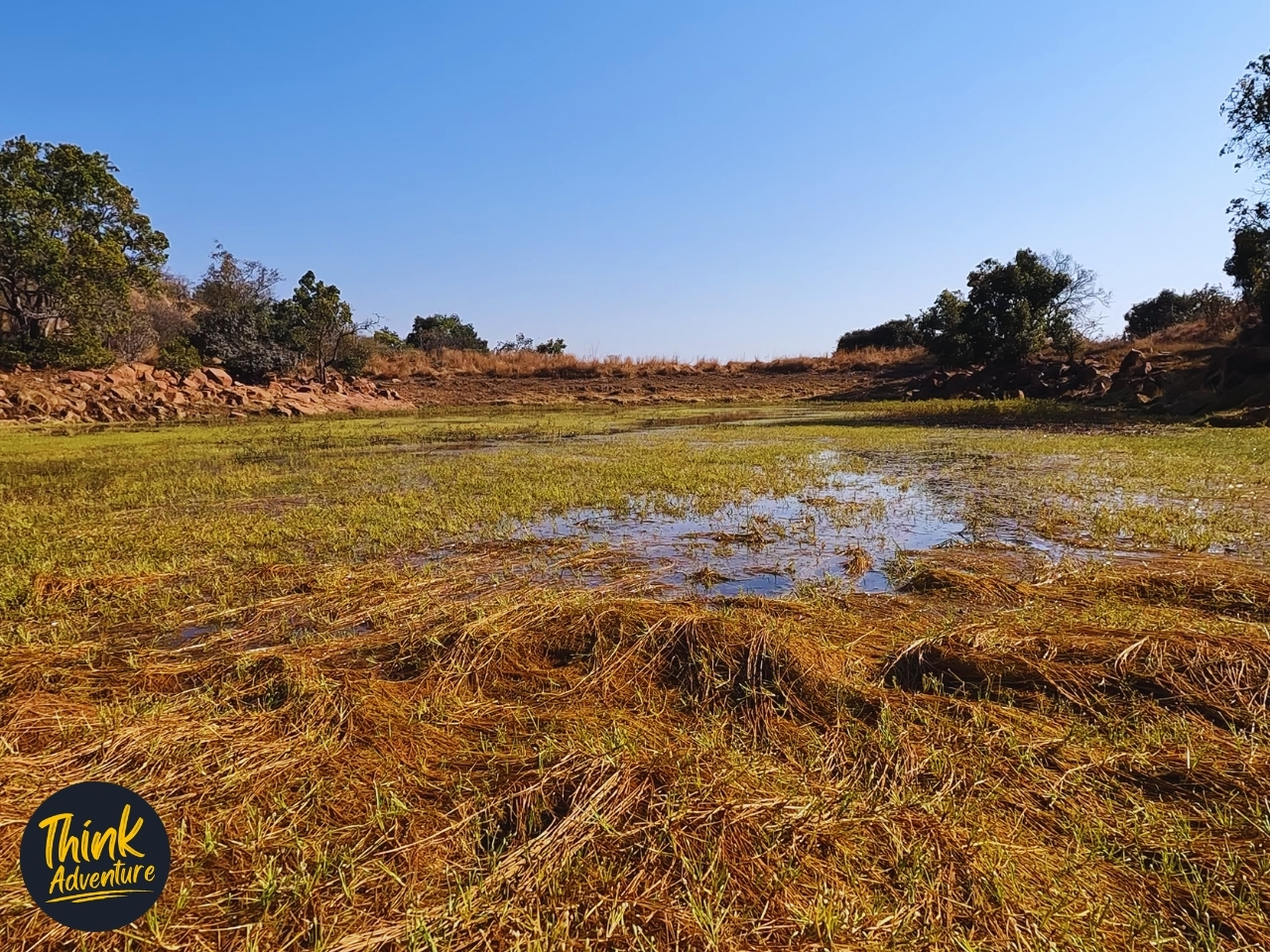
We started the morning hiking out to Kaalgatdam, and it was underwhelming — almost empty, doing its best impression of a dam. Fair enough, though. It hadn’t rained in months, and this was winter doing what winter does in the Waterberg.
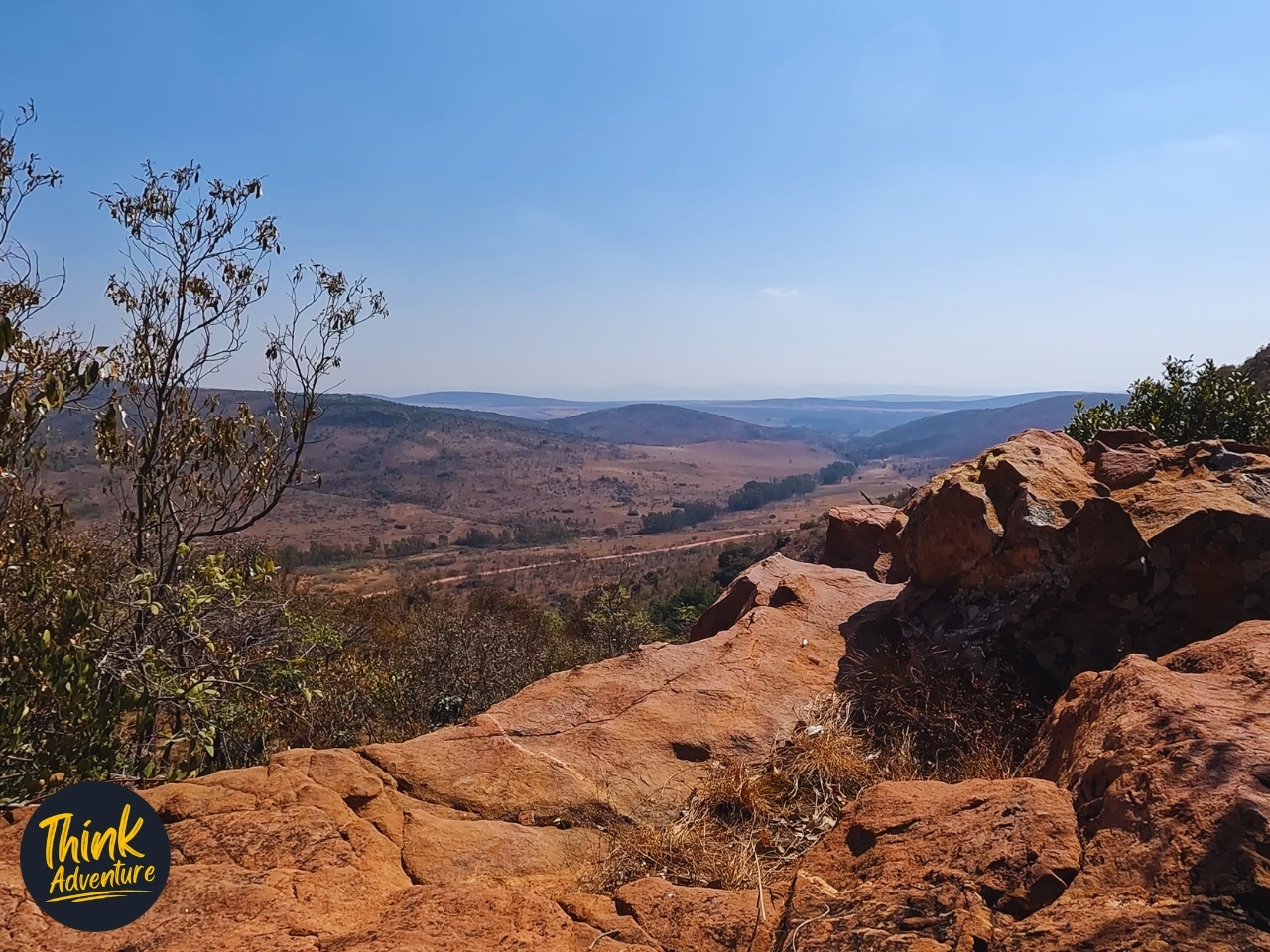
The Leopard Trail opened rocky underfoot, loosened into flatter open ground, then threw a set of ladders at us before folding into tree cover — dust and dry grass the whole way, that particular smell winter bush carries when nothing’s had rain in months. That shade was welcome — we stopped there for snacks, water, and a lookout point that made the climb worth it. Beyond the trees, the bush opened up again for the return leg to base camp, and somewhere out in the distance a herd of wildebeest moved across the grass. There is no Leopard sighting to speak of, and no Big Five on the reserve at all. The trail earns its name some other way.
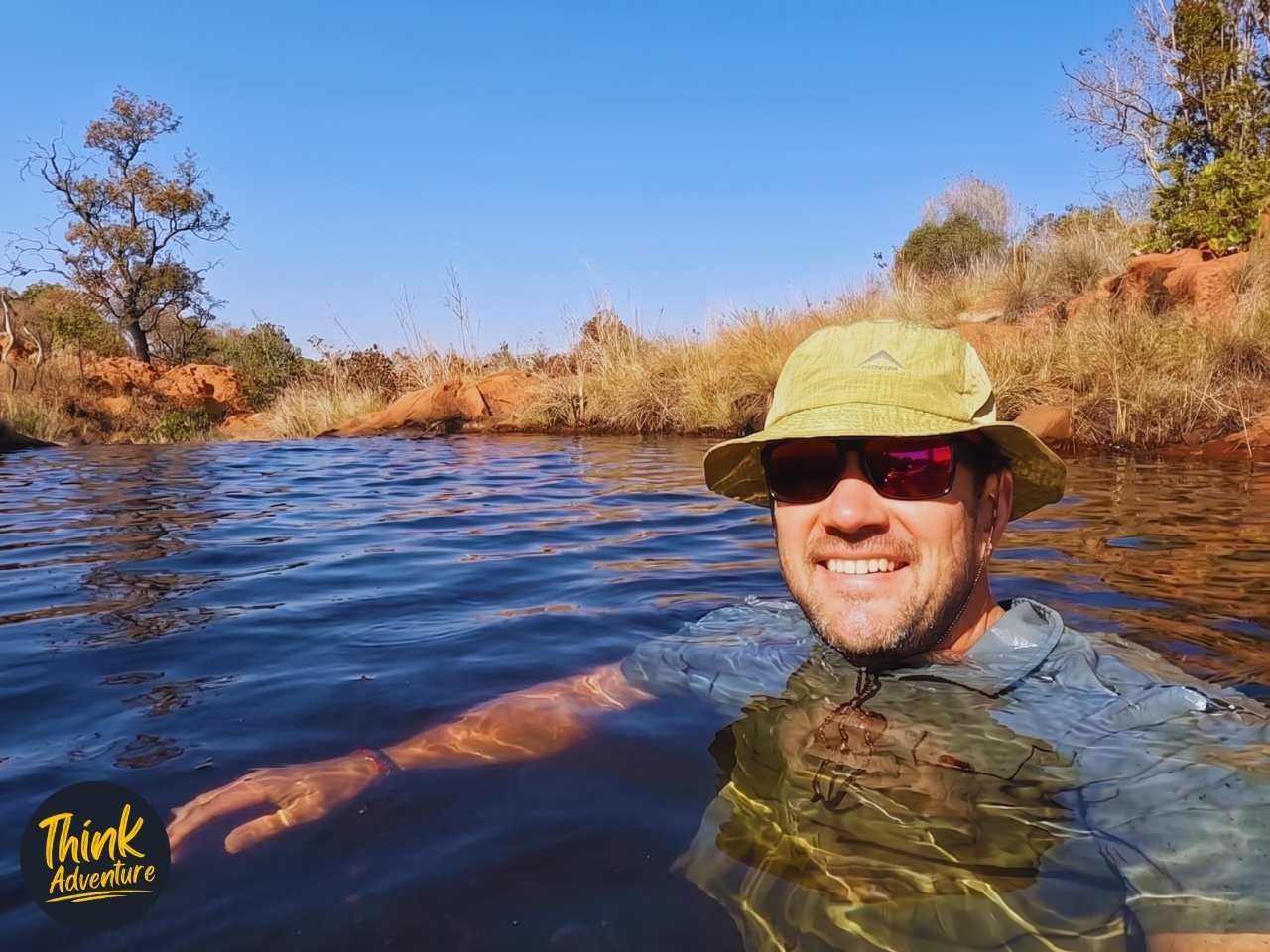
By the afternoon we were on the Rock Pools trail, tracing the same dirt road we’d driven in on before cutting off into the bush and dropping down toward the water. Some of the group eased into the water; the rest took a break at the edge, looking around, taking pictures. The water was cold — properly cold — and it carried its own smell, that mineral, slightly earthy scent of a river moving over rock. But after a full day of hiking, cold felt earned. I went in with everything on except shoes and socks, and the river did the work of a shower and a washing machine.
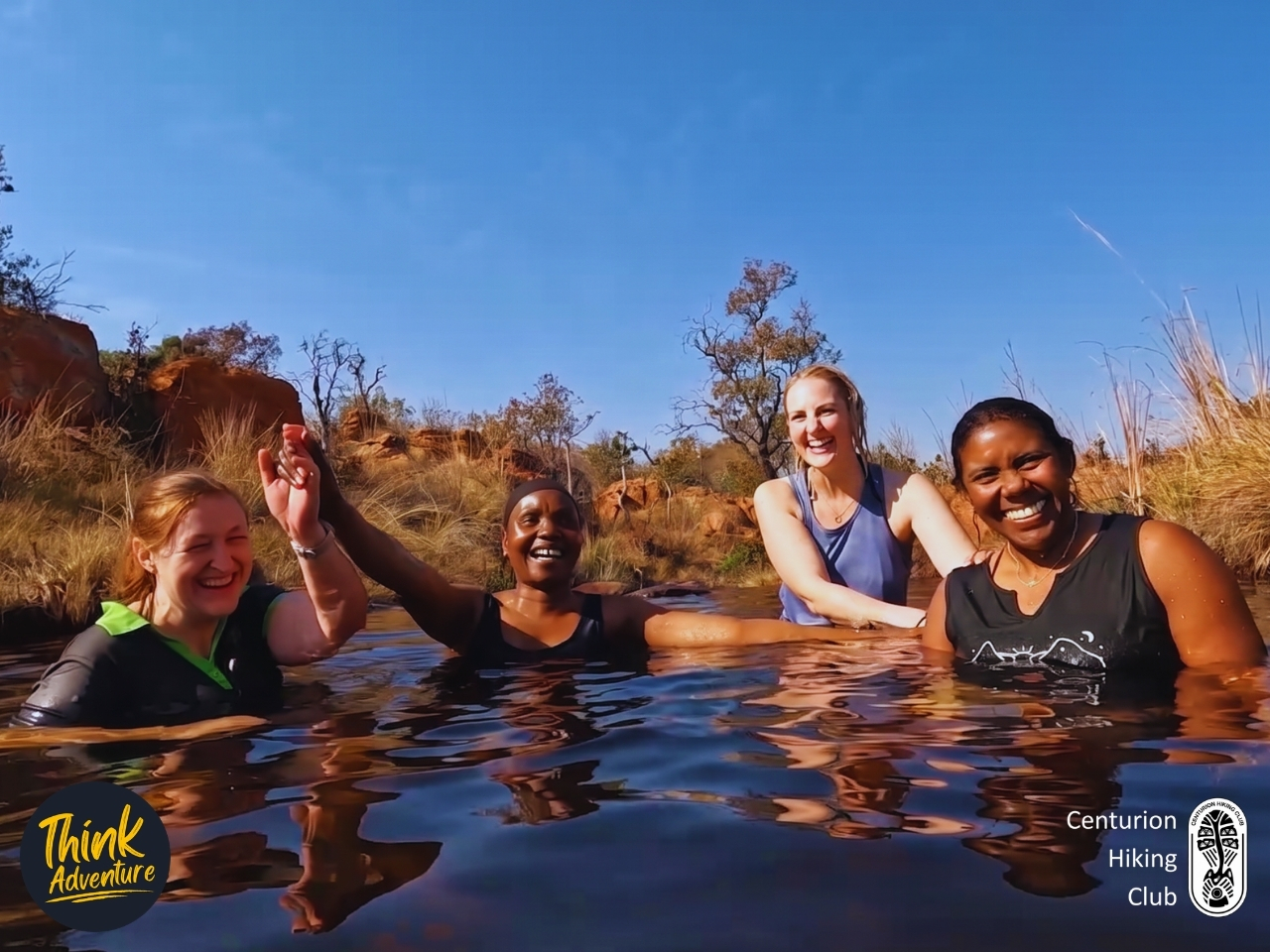
From there it was still 2.5km back to base camp — a climb, as it turns out, undoing everything the descent to the pools had just given us. We got back late afternoon, and the group scattered toward drinks, showers, looking at the fire, and the specific kind of stillness that only comes after a full day on your feet. By evening, woodsmoke had taken over from dust and river water — the fire going, and chicken potjie working its way toward dinner.
My own shower turned into a 2-man operation. I’d decided — wrongly — that a shower right before bed was a good idea, which meant negotiating with a gas geyser that had strong opinions about producing warm water. A fellow hiker ended up outside working the geyser, while I stood at the tap flicking it on and off, waiting for the ignition to catch. Between the 2 of us we got something that could generously be called a warm shower.
Day 2 — Zebra & Quagga Trail Combo (Sunday)
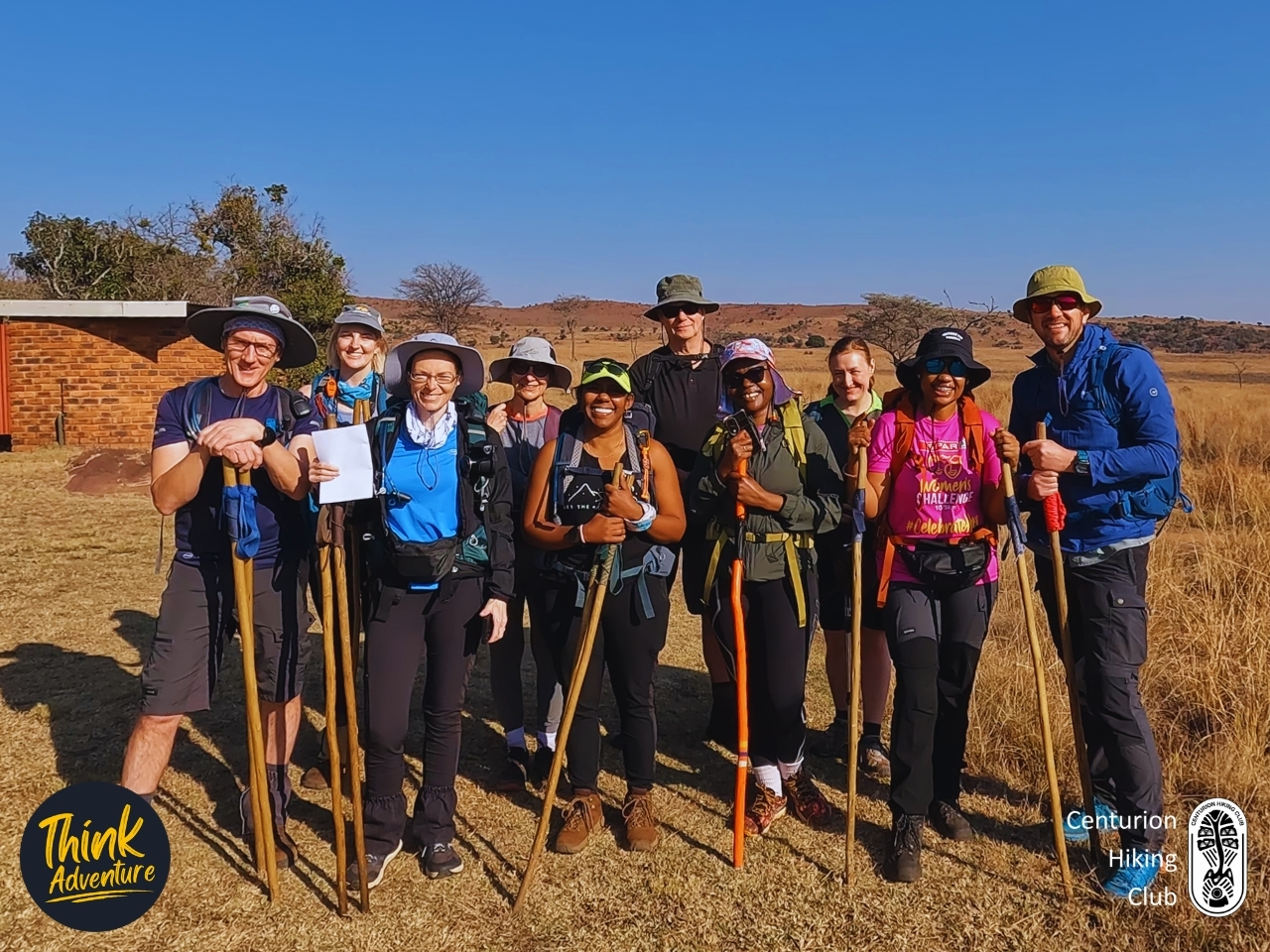
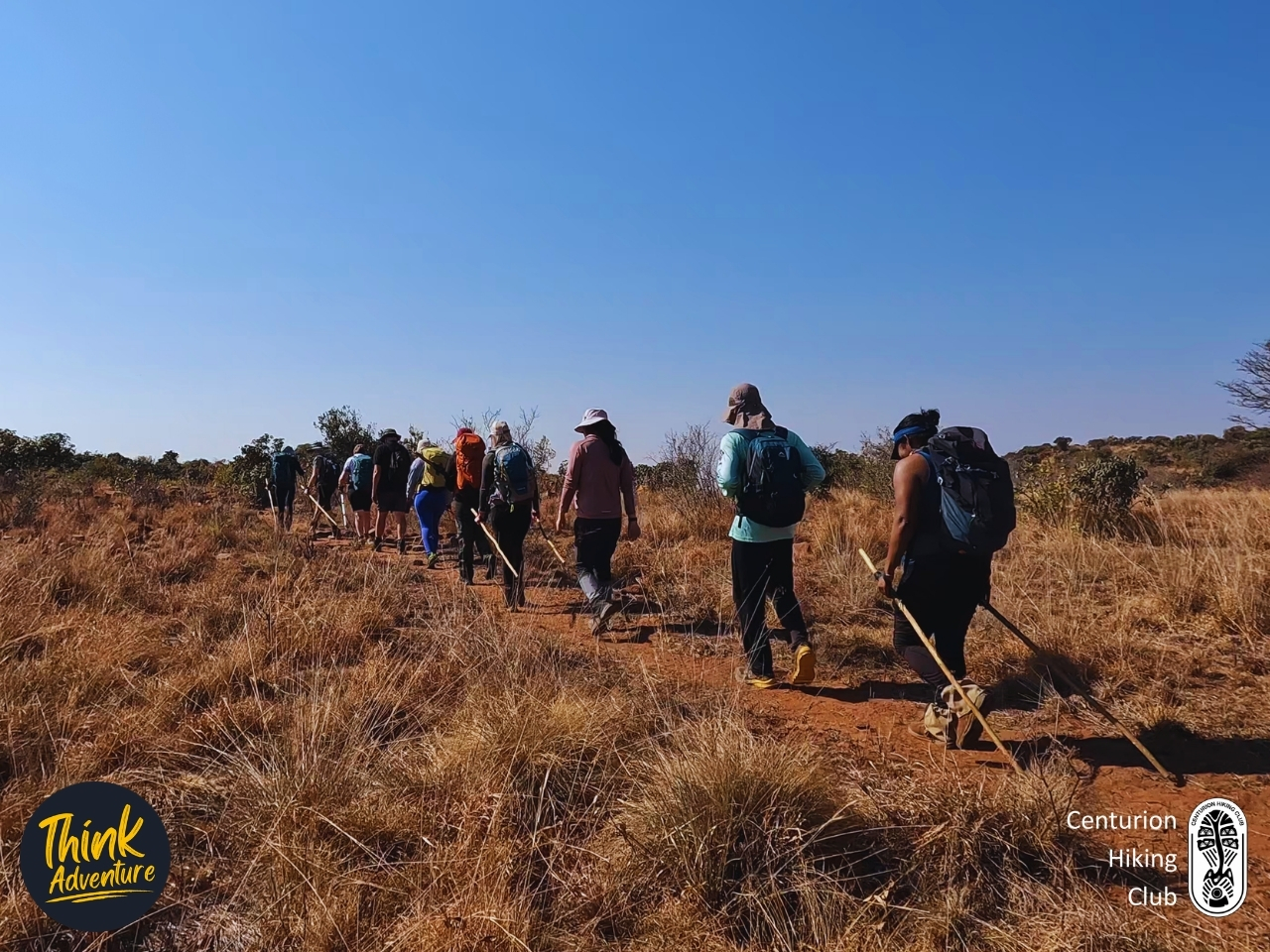
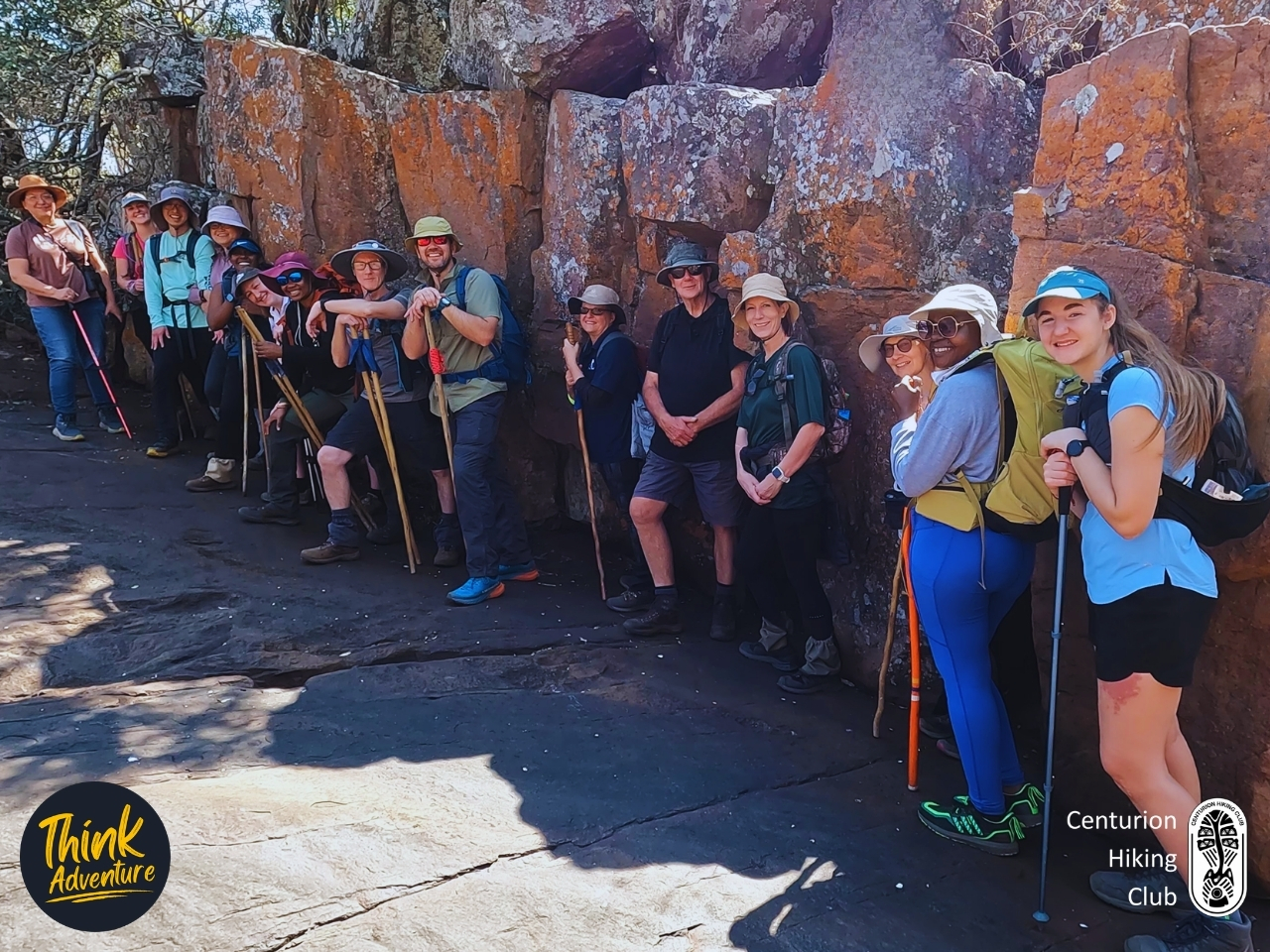
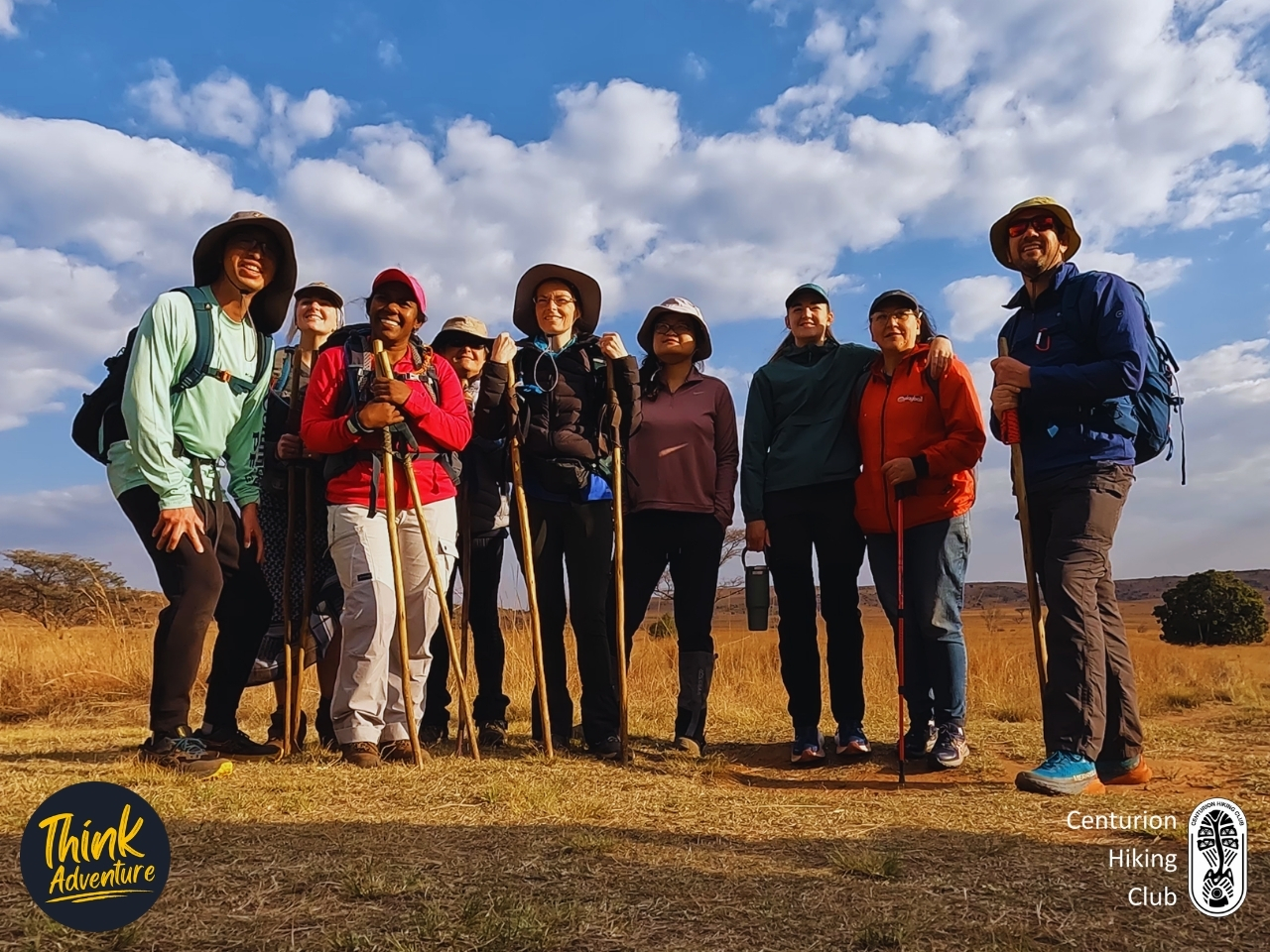
The morning opened with a sunrise worth being awake for — that particular gold-to-orange burn along the horizon before the sun clears the treeline. From there, we slowly went through the motions of getting ready for the hike — gear sorted, a group photo, and we got going just after 08:00. The terrain didn’t ask much of us. Same rocky-to-open rhythm as Leopard Trail, same dust and dry grass underfoot, the reserve doing what it does in the dead of winter.
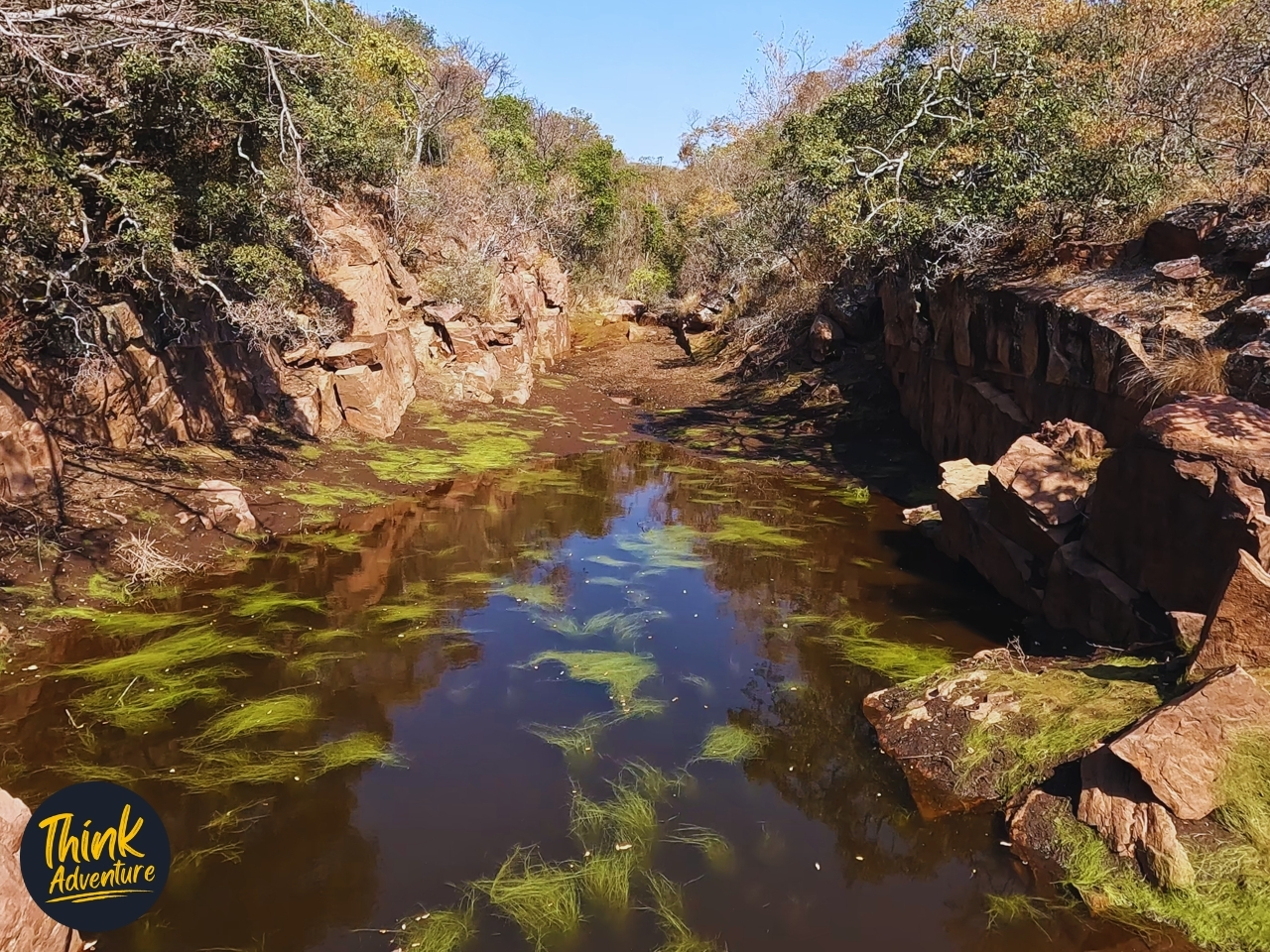
We passed Kransdam along the way, and it was another letdown — almost empty, same story as Kaalgatdam the day before. No rain in months will do that. It would have been something special to find it full — a proper detour, a chance to cool off mid-hike. Instead it was just a reminder of what time of year it is and how dry it is.
What made the day hard wasn’t any single obstacle — it was the distance and the elevation adding up, kilometre after kilometre. The final 3km ran along the same dirt road we’d driven in on, and we even passed the Rock Pools turn-off. It was tempting, but we pushed on to base camp instead, and that last stretch turned into a grind — not technical, not steep, just tired legs moving faster than they wanted to because everyone was ready to be done. No wildlife that day. Just heat, dust, and the finish line.
Lesson learned from the night before: it was time for a power shower, this time around 4pm instead of after dark, and it made all the difference. Same gas geyser challenges, negotiating with the tap the same way — but with the sun still up, it was far more bearable. If there’s a piece of advice worth passing on from this trip, it’s that one: hiking in winter, shower before the sun goes down, not after.
That evening the fire smell was back, this time carrying steak, cheese sausages, and braaibroodjies — a proper braai to close out the day’s distance.
The real moment of the day came later, though, well past midnight. It was 2am on Sunday night, sliding into Monday morning, and I woke needing the toilet. I’d left my head lamp behind, and without it the ablutions would’ve been pitch black. Rather than go back for it, I skipped the toilet altogether and did what needed doing right there in the bush. And that’s when I looked up.
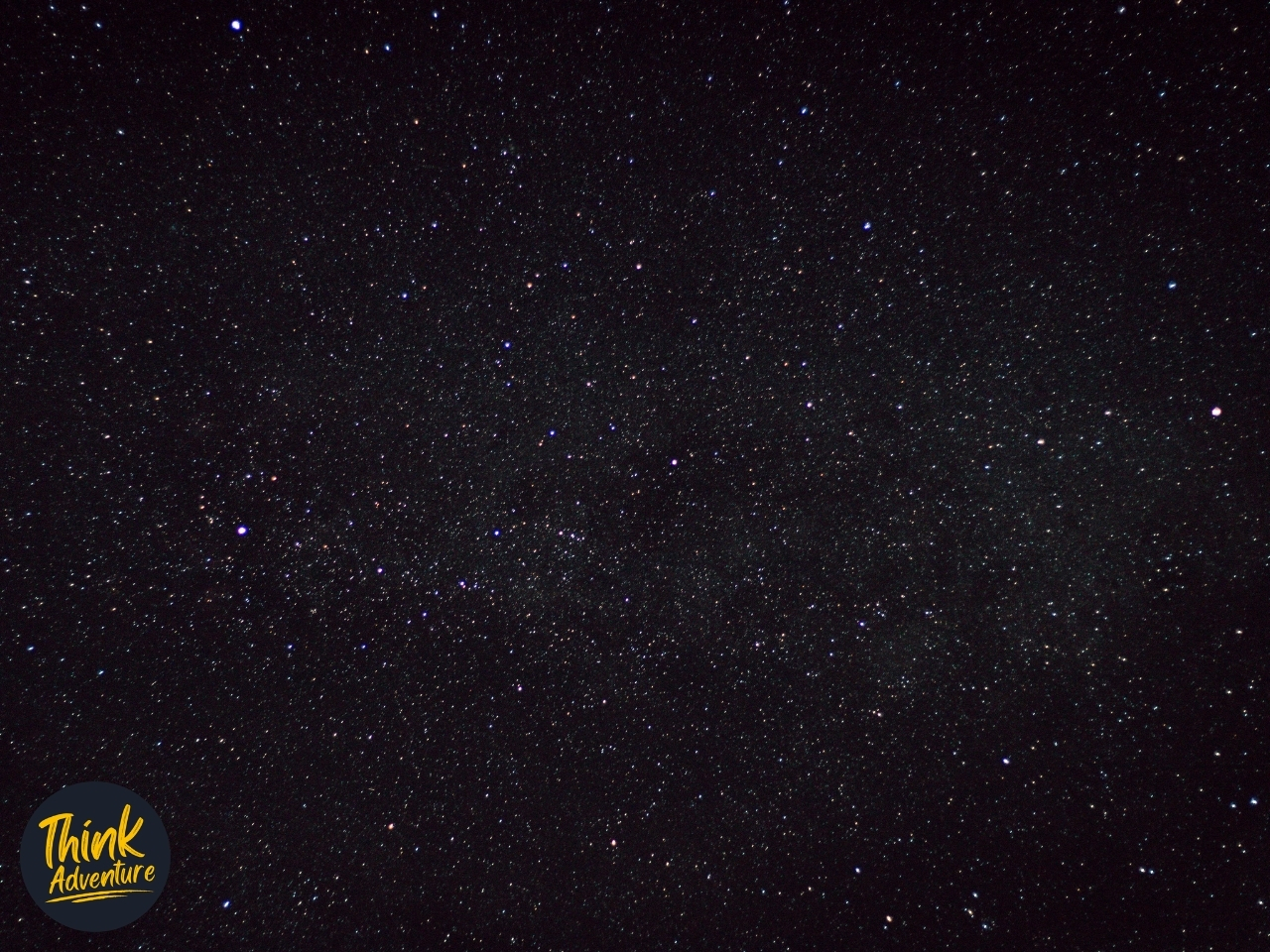
The sky was clear in a way I hadn’t seen in years — no haze, no light spill, just stars stacked on stars. I stood there far longer than I needed to, doing absolutely nothing except taking it in, being grateful for being there at that very moment to experience it, wishing I’d had a camera capable of doing it justice. I never expected a 2am toilet run to turn into the best stargazing in years.
Day 3 — Rock Pools Trail 2.0 (Monday)
Nothing new on the terrain front — same trail as Day 1, same rhythm from dirt road to rock to open ground to the pools themselves. What was different was the group. A few who hiked it first time around were back, joined by members who’d only arrived Saturday afternoon and missed the first round. We did the whole thing again purely so they could see it — it was per request, and fair enough. Rock Pools earned that kind of reputation over the weekend.
3 of the group went in for a dip. I decided against it this time. Early morning, cold air, colder water — Day 1’s version of me was a warmer, more willing swimmer.
We were back at base camp by around 11:00, and from there it was packing up, saying our thank-yous and goodbyes, and heading home. On the drive out, I spotted baboons along the road — a last bit of wildlife to send the weekend off, after 3 days of the reserve mostly keeping its animals to itself.
It’s 2am, 30 metres of open ground between the sleeping quarters and the toilet. I don’t have my head lamp with me, and without it the toilet is almost completely unusable in the dark, so I decide to skip it and do what needs doing right there instead. The reserve sleeps around me — no wind, no insects, nothing. Just the kind of silence that has its own weight to it, the kind you only get far away from city life.
And then I look up.
There is little dark space left in the sky. Not scattered stars against black — stars on stars, layered so deep the usual gaps between them have almost disappeared. It’s been years since I’ve seen the sky that full.
I stand there a while. Not cold, not in a hurry, not thinking about the toilet I walked out to use. Just standing on that patch of ground between two buildings, alone, looking up at something that makes the whole weekend’s dry dams and long dirt roads feel worth it for this 1 unscheduled minute. I wish I had a camera capable of doing it justice — and then I let that thought go, because some things are better kept as memory than as a photo.
Nobody else is awake to see it. It’s mine entirely, and somehow that makes it more mine to keep.
Bateleur suits moderately fit hikers, especially if you’re planning multiday routes like this one. It’s not a reserve that punishes you technically, but the distances add up over consecutive days, and you’ll feel it by the 3rd morning if you’re not used to back-to-back hiking.
You’ll also need to be comfortable driving on dirt roads for long distances — 17km of it just to reach base camp, at whatever pace the road allows that day. And be comfortable being uncomfortable more generally. The showers are unpredictable, the geyser has its own agenda, and depending on when you go, that might mean a cold one.
Was it worth it? Yes. The venue was new to me, and I enjoyed the adventure of figuring it out as we went — the trails, the signage, the rhythm of the reserve.
Would I go back? Yes, preferably after some good rain. Kaalgatdam and Kransdam deserve to be seen full. The landscape would be greener, the rivers would run properly, and the whole reserve would show a different side of itself than the one we got this time.
The drive home retraced itself — dirt road, then tar, patiently making my way through Bela-Bela. I thought about stopping for a coffee at the Plato Coffee Shop, like I did on my way in. Decided against it. Traffic was hectic, and I wanted to get home. Finally through Bela-Bela and onto the highway, packed, almost worse than it was coming in.
Somewhere on the tar I caught myself thinking less about the commute and more about the weekend behind me. Good people, nature, and exercise — the 3 things this reserve gave in equal measure, even when the dams and riverbeds didn’t. Except for 1 stretch of water that kept moving the whole weekend. And 2 hours, well past midnight, when the sky gave more than the ground did.
Practical Guide – Bateleur Nature Reserve – Stamvrug Multiday Hiking Trails
The Basics
- Location: Bateleur Nature Reserve, Waterberg, Limpopo — about 27km outside Bela-Bela, roughly 150km north of Centurion/Pretoria (around 2 hours’ drive, including toll gates).
- Difficulty: Moderate. Suited to moderately fit hikers, especially for the multiday route — distance and elevation add up over consecutive days.
- Bateleur Nature Reserve on Strava
- Format: Multiday hiking based from a single basecamp. This trip stayed at Stamvrug Base Camp both nights, with a different loop trail hiked each day: Leopard Trail, Rock Pools Trail, and a Zebra & Quagga combo. Note that the reserve also offers true basecamp-to-basecamp routes for those who want to move accommodation each night — check with the reserve on which format suits your group.
- Best time of year: Winter offers cooler hiking temperatures, but expect the reserve’s dams and pans to be dry or near-empty. For fuller rivers and greener landscapes, aim for after the summer rains.
Getting There
- Drive to Bela-Bela, then take the D180 for about 10km before turning right onto a dirt road.
- From there it’s 17km of dirt road to Stamvrug Base Camp. The Bateleur Nature Reserve signage confirms you’re on the right route.
- Navigating within the reserve itself takes a bit of getting used to — the signage takes some decoding, so budget extra time on your first drive in.
- Bateleur Nature Reserve on Google Maps
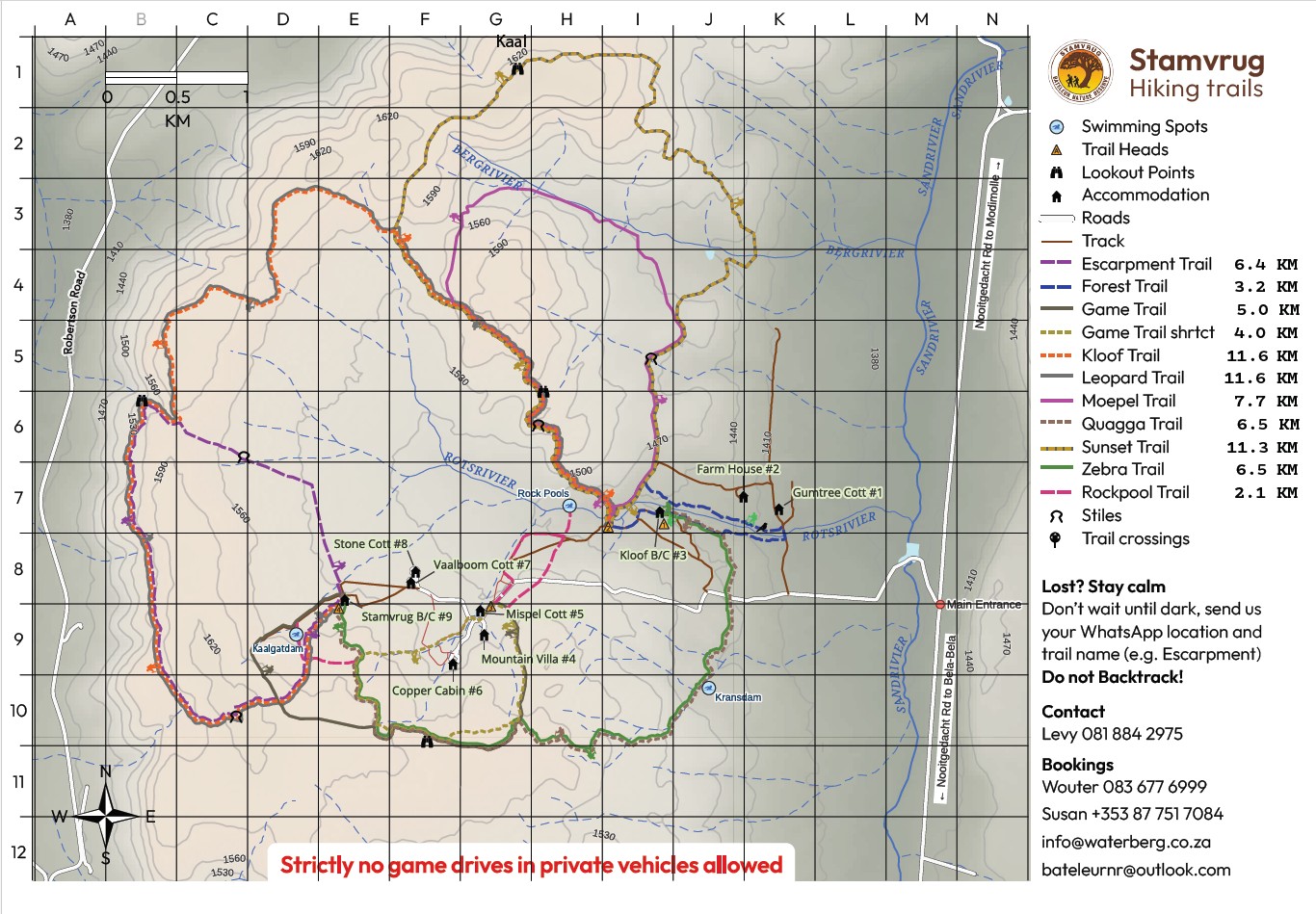
Bateleur Nature Reserve Trails Map
What to Expect
- 3 trails hiked over the weekend, all returning to Stamvrug Base Camp each day:
- Leopard Trail — 11.6km, 349m elevation gain, roughly 3.5–4 hours. Rocky terrain early, opening to flatter ground, a set of ladders, and a shaded lookout point partway through. Despite the name, there’s no Big Five on the reserve and no leopard sighting to speak of.
- Rock Pools Trail — 2.1km, around 30 minutes each way. A short out-and-back trail down to the reserve’s rock pools, runs partly along the entrance dirt road before cutting into the bush.
- Zebra Trail & Quagga Trail combo — 6.5km each (13km combined), with the Quagga Trail carrying most of the elevation at 395m gain. This was the toughest day of the weekend.
- The reserve has 11 trails in total, ranging from 4km to 12km, so there’s plenty beyond these 3 to explore on a return visit.
- Physically, expect long stretches of dirt and rock underfoot, minimal shade outside of a few wooded sections, and no water refill points on the trails — pack what you need for each day.
What to Bring
For The Trail
- Water (no refill points on trail), snacks, sunscreen, hat.
- Hiking poles — useful on the rockier sections.
- Swimwear or clothes you don’t mind getting wet, for the rock pools.
For Camp
- Bedding — beds are provided at basecamp, but bring your own sheets and sleeping bag.
- Own toiletries, towels, and toilet paper.
- Matches — handy for toilet odours in an off-grid setup.
- Own food and drinks for the full stay, plus a few shareable snacks for camp — crisps, nuts, crackers — hikers tend to pool these around the fire.
- Own kitchen basics: crockery, cutlery, pans, dish soap, and a drying towel (a 2-plate gas burner is provided).
- A cooler box for drinks — the venue doesn’t sell ice.
- Keep meat for the first night’s braai in a cooler box; freeze meat for the rest of the stay, and check on gas fridge availability for storage once you arrive.
- There are no shops nearby, so buy everything you need before heading out to the reserve.
Good to Know
- Cell signal was available at Stamvrug Base Camp; signal on the trails themselves wasn’t tested.
- Water at basecamp is borehole-sourced and drinkable, though most hikers bring their own.
- No snake sightings over the weekend — late winter, when snakes are largely inactive, is a lower-risk time on that front, though normal trail caution still applies.
- Showers run on gas geysers (“donkey geysers”) — hot water isn’t guaranteed, and mornings or early afternoons tend to work better than late evenings.
- Kaalgatdam and Kransdam were both close to empty during this visit due to the dry winter season — don’t expect swimming spots there outside of the rainy season. The rock pools were the reliable water source on the reserve.
- Along the way into Bela-Bela, Plato Coffee Shop is a good stop if you have time before or after the drive in.
Emergency Contacts & Nearest Help
- Levy is onsite at the reserve — +27 81 884 2975.
- Nearest town with shops and medical facilities is Bela-Bela, about 27km away via dirt and tar road.
- Cell signal is available at basecamp, so contact is possible from there if needed.
Booking
- This trip was organised as a Centurion Hiking Club (CHC) group event, which could differ from individual bookings due to large group discounts.
- Bateleur Nature Reserve offers day-hiker, multiday, slackpacker, and self-catering “stay and explore” options, with rates listed on their website.
- Contact: Susan (WhatsApp bookings) +353 87 751 7048, Wouter (day hikers) +27 83 677 6999, Levy (onsite) +27 81 884 2975, or email bateleurnr@outlook.com.
- Website: bateleurnaturereserve.co.za
The Verdict
- Good fit for: Moderately fit hikers comfortable with multiday distances, dirt-road driving, and rustic, off-grid accommodation.
- Not ideal for: Beginners, anyone wanting guaranteed hot showers or on-trail water refills, or those hoping to see dams and rivers full outside of the rainy season.
- Quick summary: A solid moderate multiday hiking base with varied trails, reliable rock pools for swimming, and a genuinely off-grid experience — best visited after good rain for a fuller landscape.
Frequently Asked Questions – Bateleur Nature Reserve – Stamvrug Multiday Hiking Trails
What base camps are available on the Bateleur multiday hike?
The Stamvrug multiday hiking trail network features two primary rustic base camps: Kloof Base Camp and Stamvrug Base Camp. Both overnight huts offer basic shelter, bunk beds, mattresses, braai areas, and donkey-geyser heated showers, providing essential comfort for backpackers between daily trail loops.
Is there electricity at the Bateleur overnight hiking huts?
No, the overnight hiking huts at Bateleur Nature Reserve do not have electrical power. The base camps rely on gas or solar lighting and wood-fired donkey geysers for warm water. You should bring fully charged power banks, headlamps, and extra batteries for your trip.
Can you do slackpacking on the Bateleur Nature Reserve multiday trail?
Yes, Bateleur Nature Reserve offers a slackpacking option for its multiday Stamvrug trails. Hikers can arrange for their heavy luggage, cooler boxes, and sleeping gear to be transported directly between the base camps or cottages, allowing them to hike with only a light daypack.
How difficult is the Bateleur Stamvrug multiday hike?
The Stamvrug trail network ranges from moderate to challenging across its various interconnected loops. While routes like the Porcupine and Zebra trails feature manageable terrain and rock pools, sections like the Sunset Trail involve steep climbs, rocky scrambles, and exposed ridge walking requiring good fitness.
Do I need to bring my own cooking utensils and bedding for the hike?
Yes, you must bring your own sleeping bag, pillow, cutlery, plates, and cooking gear for overnight stays. While the base camps provide basic pots, pan grids, and ample braai wood, they are not stocked with personal eating utensils or linen.