Nan Hua Temple Bronkhorstspruit: A Guide to South Africa’s Largest Buddhist Temple
Bronkhorstspruit isn’t where I expect to find the largest Buddhist temple in Africa.
I turn off the N4, past a stretch of dry highveld grass, and there it is — an ornate Chinese gate rising out of the veld, orange and green tiles catching the midday sun, stone lions standing guard on either side. Behind it, 600 acres of temples, courtyards, and covered walkways stretch out further than seems possible from the road.
I don’t know it yet, but by the end of the afternoon I’ll be standing in a hall so quiet it stops me mid-thought. Right now, all I know is that this shouldn’t be here — on the edge of a small Gauteng town, past a speed limit sign and a stretch of dead winter grass — and yet it is.
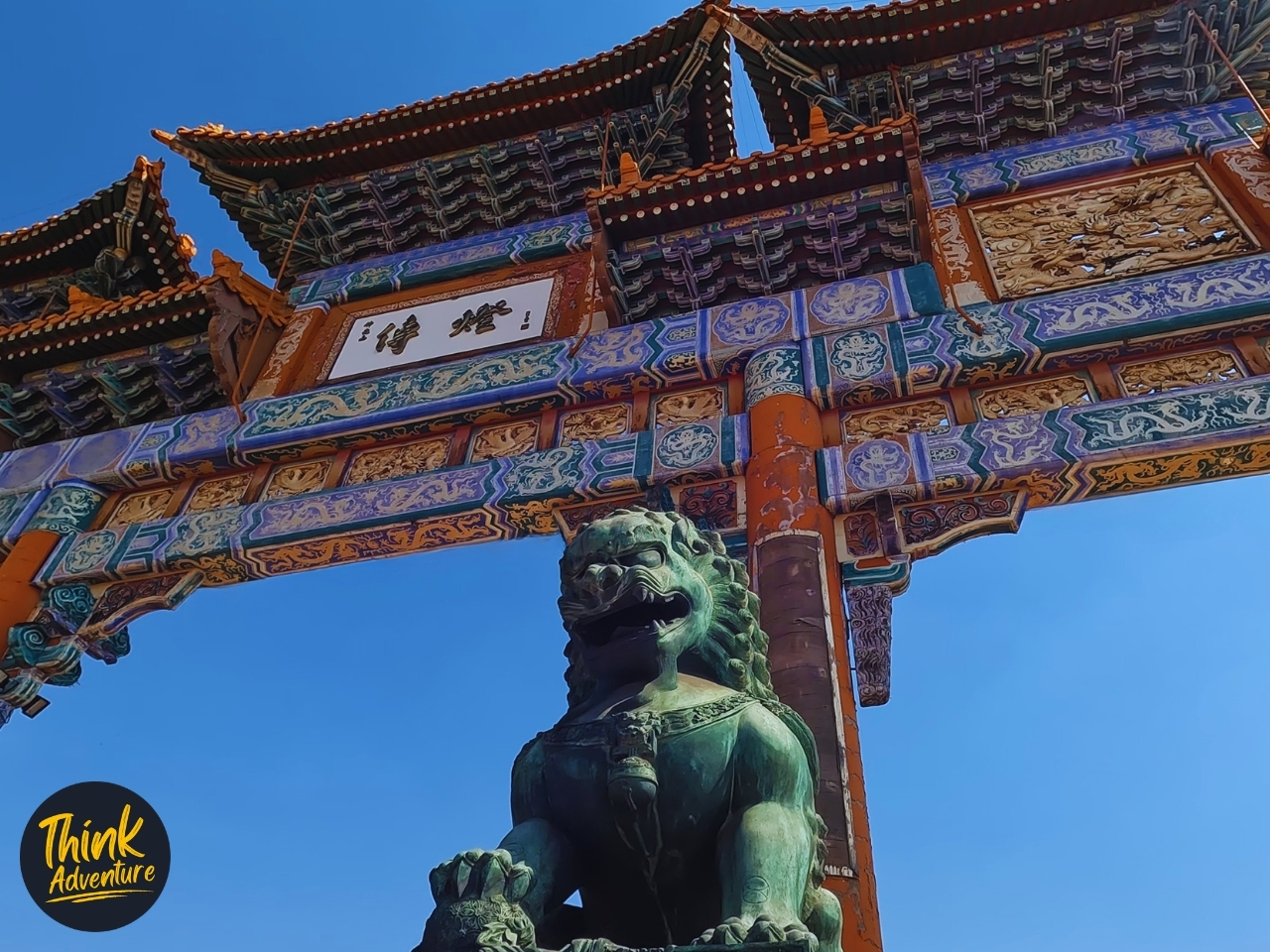
We’d had Nan Hua Temple on the list for a while. Sunday, we finally made the drive out — a family outing, out past Bronkhorstspruit on the N4, through 2 gates marking the edge of the property before the temple complex itself comes into view.
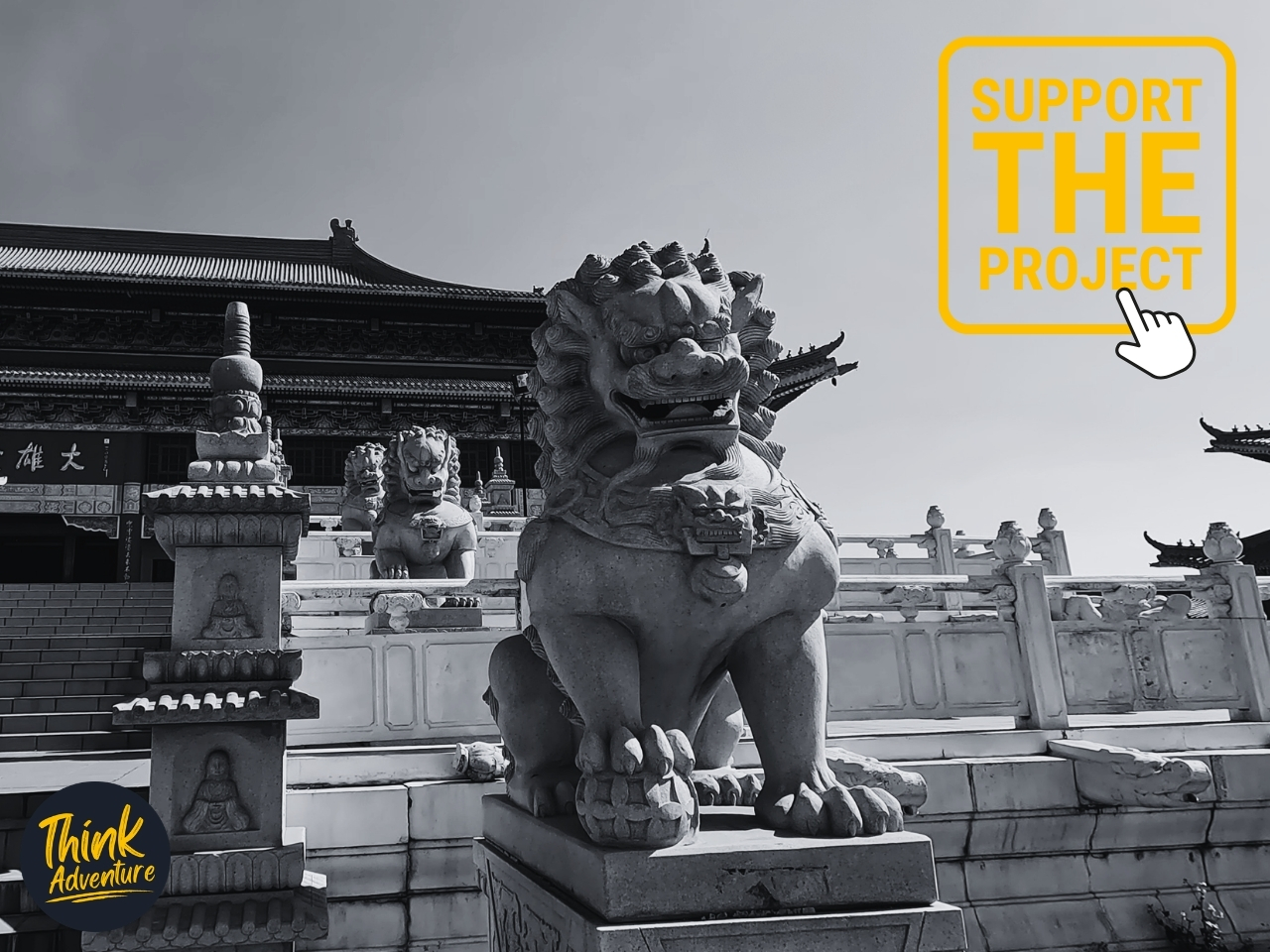
The scale catches you off guard before you’ve even parked. 600 acres, orange and green tiled roofs stacked in tiers against a flat highveld sky, stone lions guarding every entrance in pairs — the male with a paw resting on a ball, the female with hers on a cub, one guarding the building, the other guarding the people inside it.
We arrived just after 12:00 and parked outside the main temple gates. The grounds were quiet — not empty, just unhurried. Mid-day, dry, the kind of highveld winter light that bleaches the grass pale and doesn’t quite warm the air. We had an hour before the tour started at 13:00, so we wandered — past the lions, under the arches, along the covered walkways — getting a first look at a place that felt like it had been lifted whole from somewhere else and set down on the edge of a small Gauteng town.
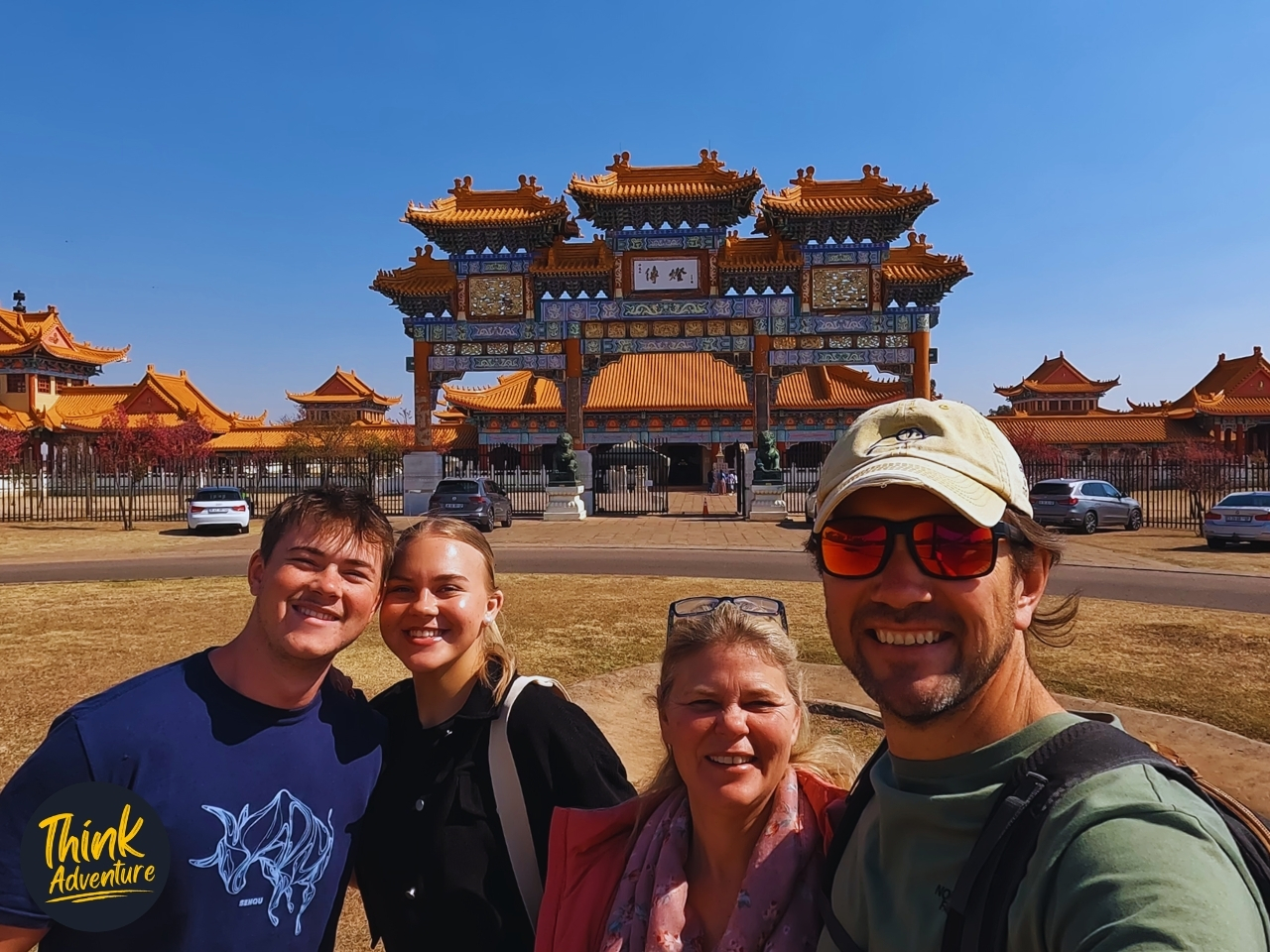
Sipho found us in reception a few minutes before 13:00 — we’d used the wait to browse the curio shop, where I nearly bought a set of prayer beads before deciding R500 was more than the moment called for. The tour started at the temple bells, then a wall of framed photographs: the grand master and the order’s head temples back in Taiwan.
Out into a covered courtyard, more posters lining the walk — this time showing the order’s other temples scattered across the world. He paused here to explain the difference between a monk and a nun in Buddhism — a monk is male, a nun is female, both fully ordained and living by the same core discipline, though nuns follow a longer list of precepts.
We crossed to a second building, stepping past 2 stone lions at the entrance — the male with a paw on a ball, the female with a paw on a cub, guardians of the structure and the people inside it. Sunday mornings, apparently, the space beyond becomes a dining hall for a buffet lunch. We didn’t linger there. Stairs ran up either side, a sign halfway asking us to remove our shoes. He explained why — it’s both practical and symbolic, keeping the space clean, but also leaving the dust and noise of the outside world behind before you sit down to practice. We climbed to the first prayer hall.
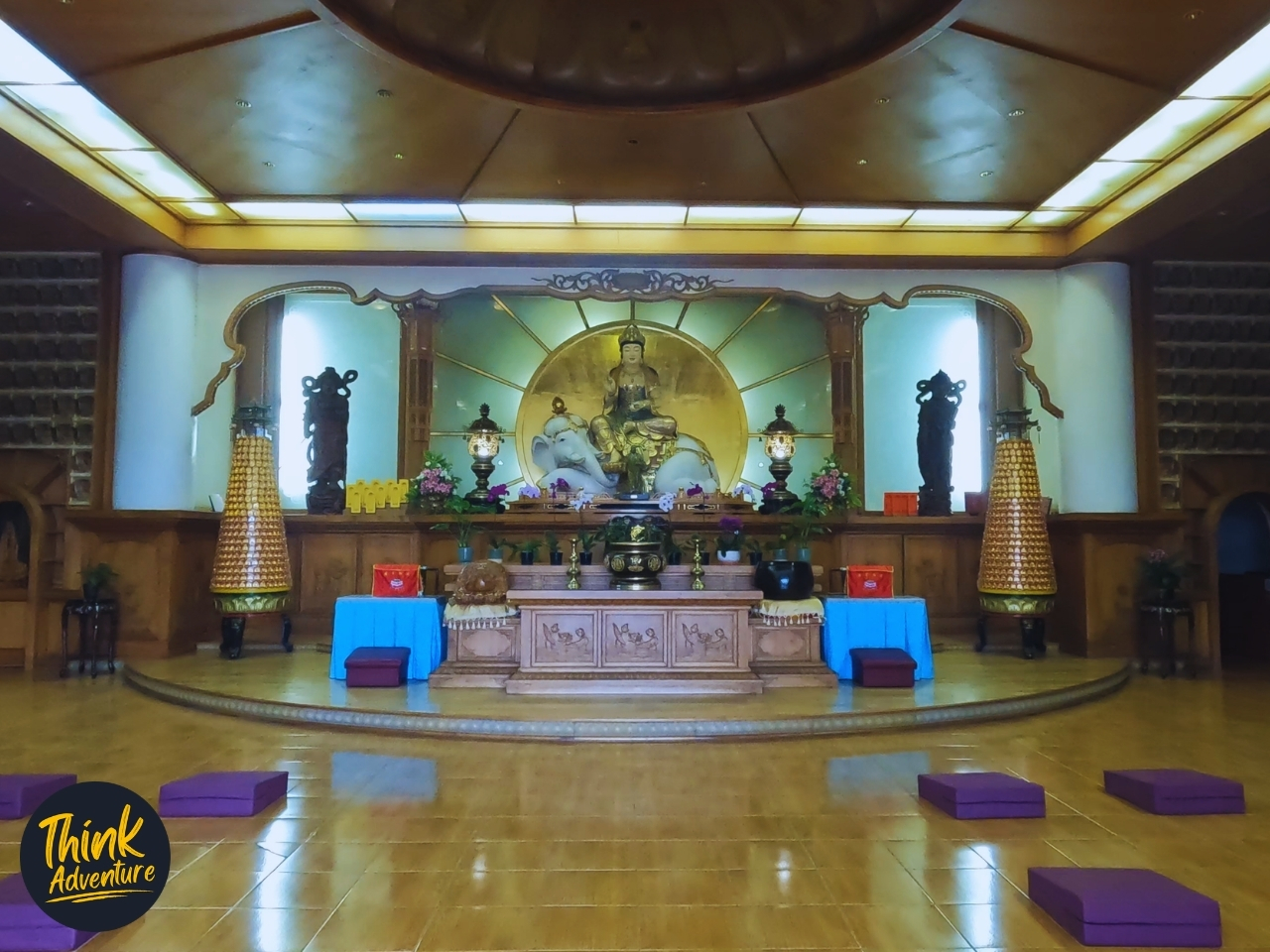
This is where the tour slowed down. We sat on cushions on the floor while the guide talked us through what surrounded us — a woman seated on a white elephant at the front of the hall, explained as Samantabhadra, one of Buddhism’s four great bodhisattvas. The elephant isn’t decoration; it stands for steady, grounded practice — showing up and doing the work rather than chasing enlightenment in a single dramatic leap. He walked through Buddhism’s five precepts here too — the basic rules Buddhists try to live by, similar to commandments: no killing, no stealing, no sexual misconduct, no lying, no intoxicants.
A wooden fish drum sat to one side, the kind beaten during meditation — fish don’t close their eyes, so the sound is meant to keep the mind awake rather than let it drift. There was talk of burning incense and making wishes, for yourself and for others, and 2 guardian statues flanked the hall, there for protection. On the way out, a swastika was carved near the exit — not the symbol most Westerners flinch at, but an ancient Buddhist mark of good fortune, borrowed and inverted by the Nazis centuries after Buddhists had already been using it. There was also the idea that we’re all born enlightened, and the practice is really about uncovering that rather than achieving something new.
Down the stairs, back through reception, and out to the main temple complex. A second hall held a very different figure — a woman with a thousand hands and eyes, each palm holding an eye of its own, representing compassion paired with the ability to actually see suffering and respond to it. Small plaques nearby carried the names of sponsors — people and companies who’d funded individual statues.
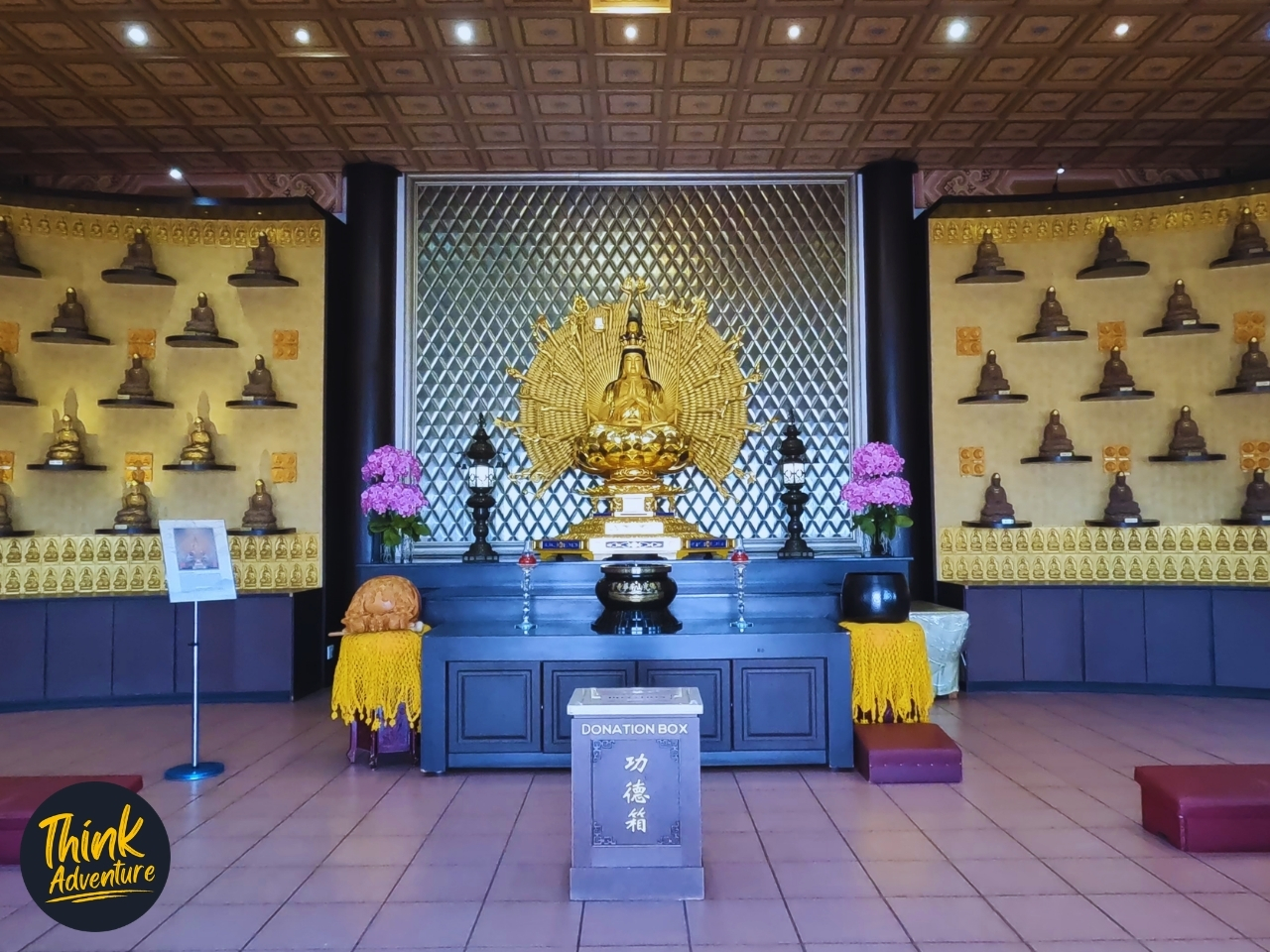
Then the main temple itself, and this is where the tour peaked. Three Buddhas dominate the hall, each representing something different, and how they relate to one another. Another wooden fish drum sat here too. Rows of small oil lamps were available to light and place near the Buddhas — an offering, dedicating the merit to yourself or someone else. Incense burned steadily through the hall.
That’s where the tour ended. Shoes back on, out through the temple, and I spent a few more minutes wandering the grounds on my own, chasing lines and light for photos before we left.
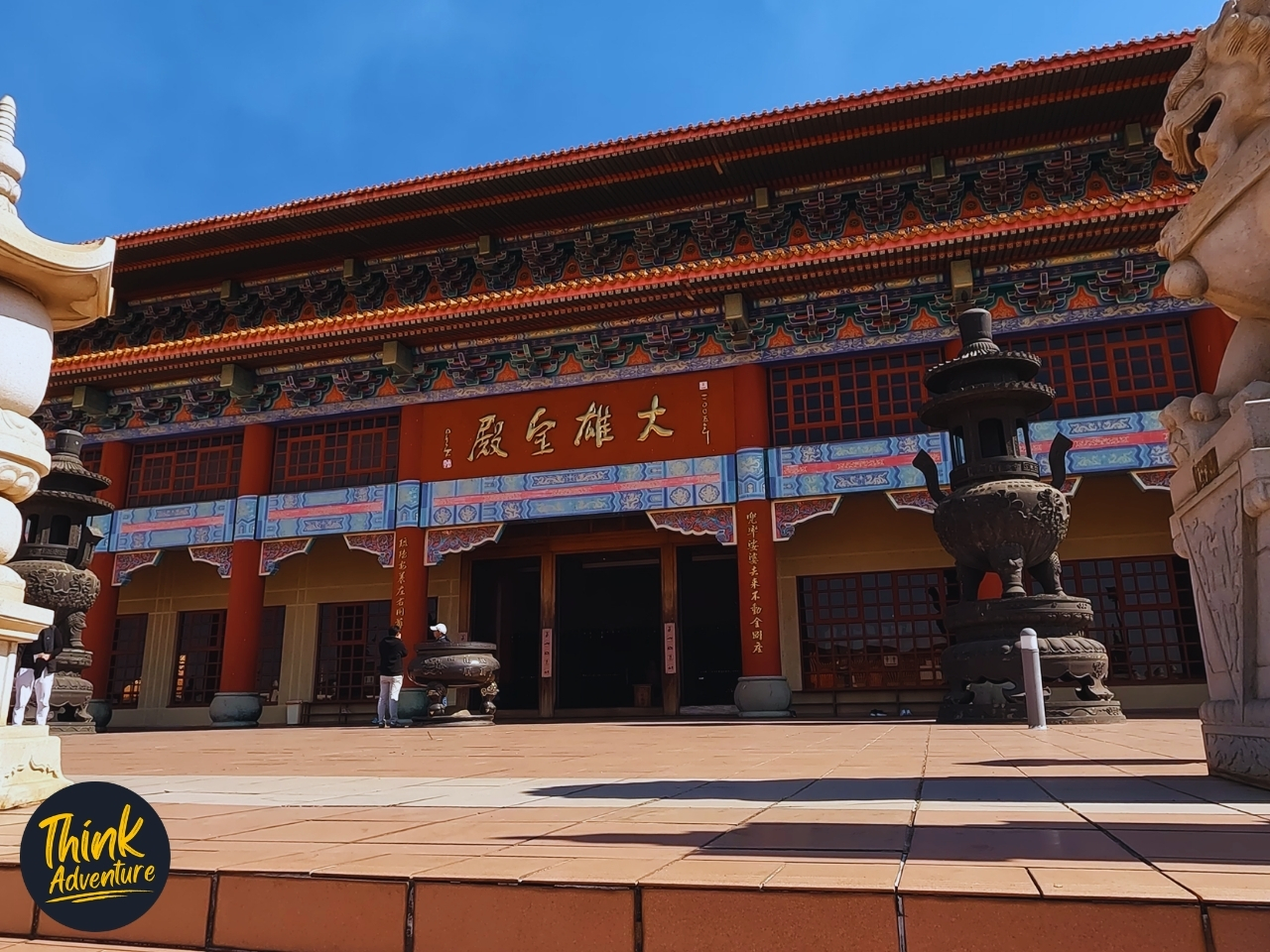
Everything up to this point has been building toward this hall. The scale of the property, the architecture, the lions at every gate, an hour of Sipho walking us through what it means to live as a Buddhist — all of it ends here, in the Great Hero Hall.
This is also where the tour itself comes to a close. Sipho gives his last presentation, walking us through the three Buddhas and what each one means.
Three Buddhas sit at the front: Shakyamuni in the centre, the historical Buddha who taught the world as it is now; Medicine Buddha to one side, watching over health and the difficulties of this life; Amitabha on the other, tied to what comes after it. Past, present, and future, sitting together in gold.
I step in and the noise drops out of me. It’s the same feeling as walking into a cathedral — vast, high-roofed, three massive Buddhas instead of stained glass and stone saints. Nobody has to ask for quiet — the hall does it for you. I stand here looking at the Buddhas, just taking it in, not thinking about anything in particular.
I didn’t go in with high expectations, and I think that helped. Visiting a Buddhist temple was new territory for me — I had no real idea what to expect, so I just took the outing as it came. Nothing about it fell flat because I hadn’t set myself up to be disappointed.
It’s a trip that suits almost anyone. Families, photographers, people curious about Buddhism, anyone after a quiet afternoon out — Nan Hua works for all of them. The one group I’d manage expectations for is young kids. We had a few in our group and they seemed to zone out quickly during presentations. There’s a lot of standing, sitting, and listening involved, and the meaning behind what you’re looking at doesn’t resonate well with young children — they want to play, not sit still and take in symbolism.
I’d go back. Next time I’d try the Sunday buffet, take a look through the museum and the tea house we skipped, and go back to the curio shop — maybe willing, this time, to pay the R500 to R1000 for a set of prayer beads I talked myself out of on the way in.
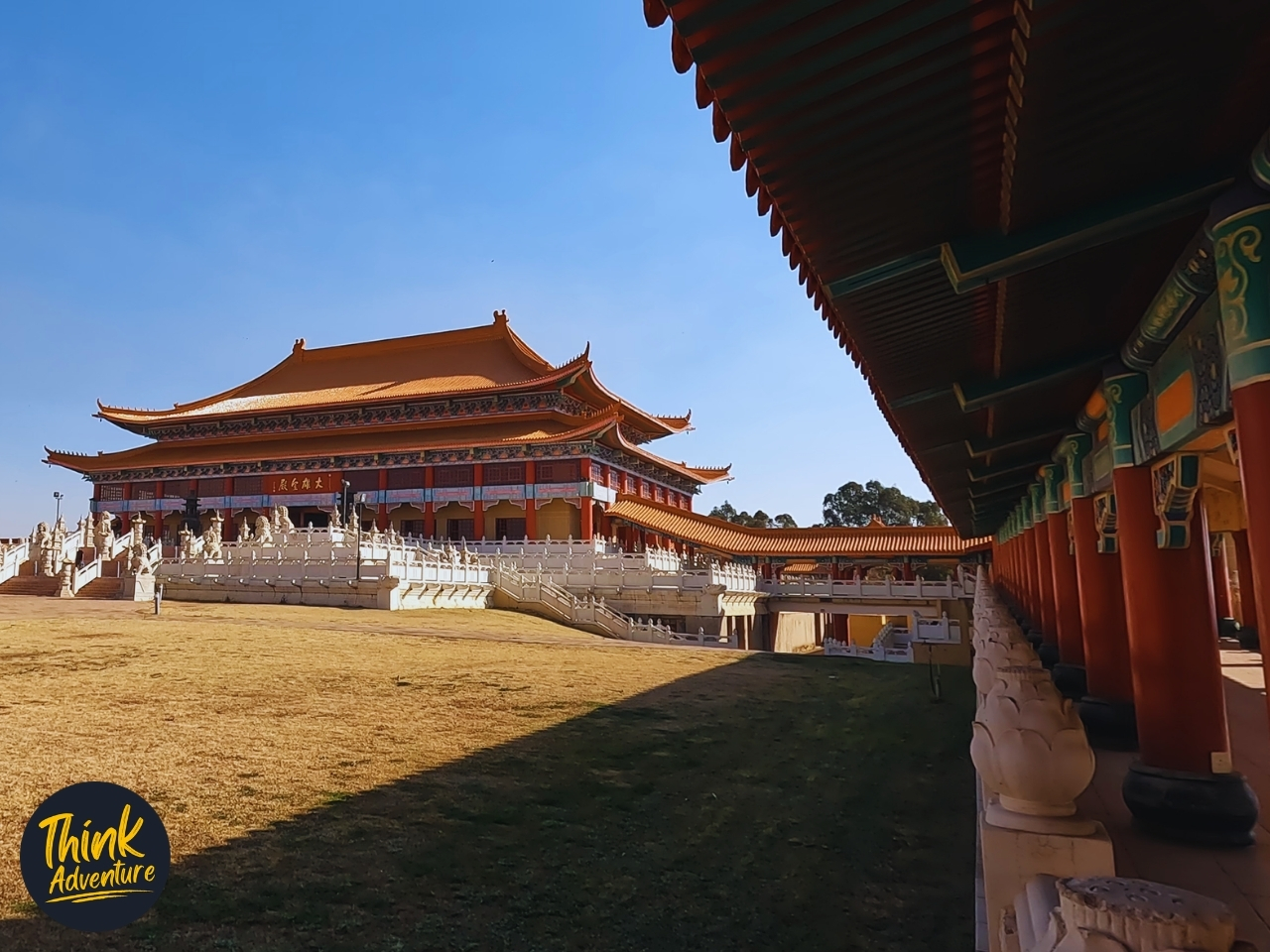
After the last presentation in the Great Hero Hall, I took a few more photos before we headed back to the car. We grabbed something cold from the cooler to drink for the road and started the slow drive home.
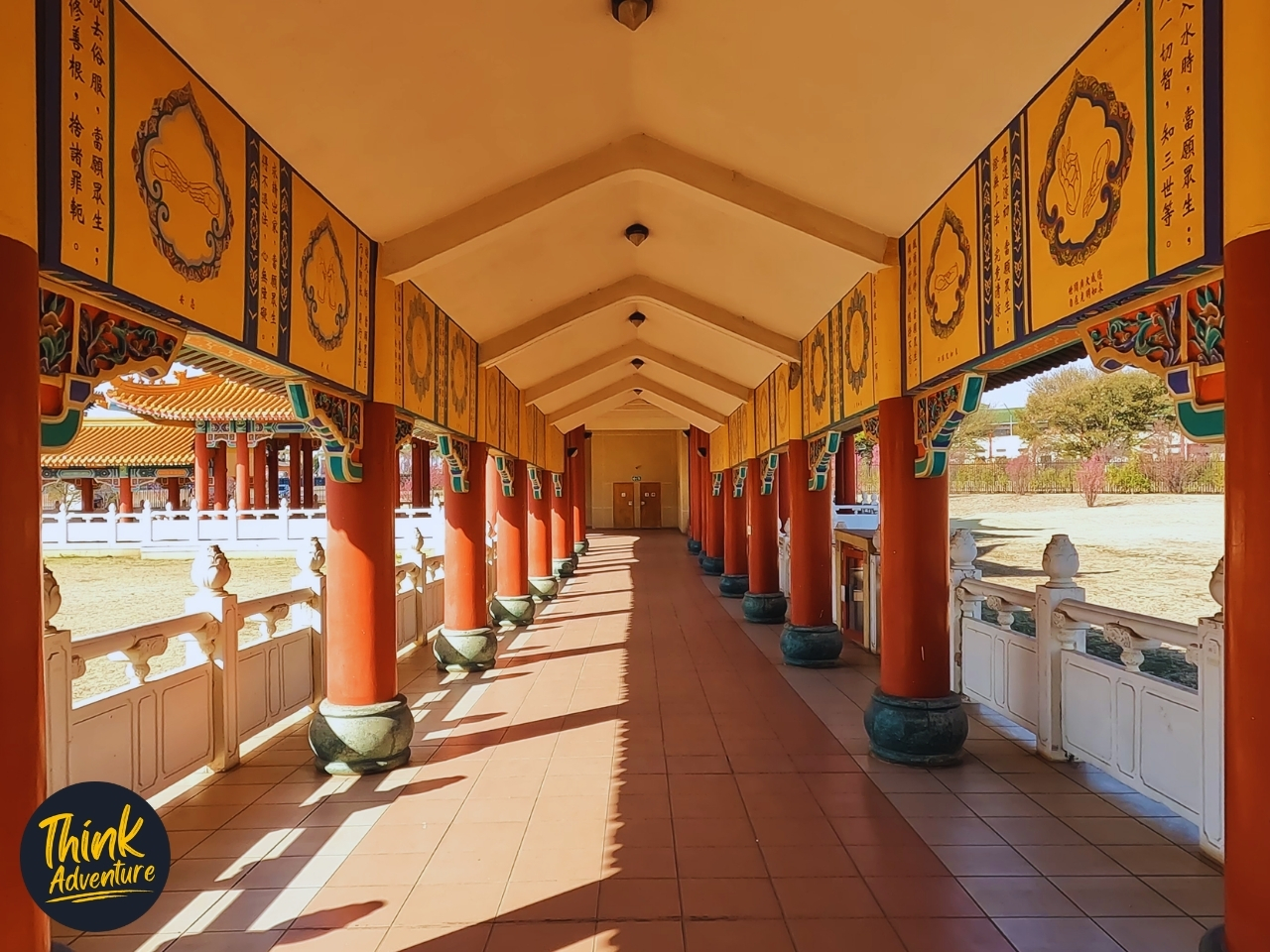
As we made our way out, Sipho was walking alongside the road back toward where the tour had started. We waved goodbye through the window and made our way home, talking about what we learned — the bits that stuck, the things we found interesting.
Nothing about the day left me with some big takeaway. It was simply an interesting way to spend a Sunday — a place I’d been meaning to visit, finally ticked off the list.
Practical Guide – Nan Hua Temple Bronkhorstspruit
The Basics
- Nan Hua Temple, Cultural Park, Bronkhorstspruit — the largest Buddhist temple and seminary in Africa
- Difficulty: easy — mostly flat walking, with some stairs
- Duration: guided tour runs about an hour
- Best time to visit: any season; a clear winter’s day gives sharp light for photos
Getting There
- Just off the N4, on the outskirts of Bronkhorstspruit, about an hour from Johannesburg or Pretoria
- You’ll pass through 2 gates on the way in — the first into Cultural Park, the second into the temple grounds
- Free parking outside the main temple gates
- Nan Hua Temple on Google Maps
What to Expect
- The tour covers reception, a covered courtyard, the first prayer hall, a second hall, and the main temple
- Shoes off before entering the prayer halls
- A fair amount of standing, sitting, and listening — worth knowing if you’re bringing young children
- It’s a working monastery, not a museum — the pace is unhurried, and quiet is expected in the prayer halls
What to Bring
- Modest clothing — no sleeveless tops, shorts, or sundresses; shoulders, upper arms, midriff, and knees covered
- Shoes come off before entering the prayer halls — socks aren’t required, but the floors can be cold, so bring a pair if you’d rather not go barefoot
- Cash — for the curio shop or a donation
- No dogs permitted on the grounds
Good to Know
- Photography isn’t allowed inside some halls — check with your guide before shooting
- Bronkhorstspruit Dam is nearby if you want to extend the day
- Budget extra time before or after the tour for the museum, tea house, and curio shop — none are included in the guided tour itself
Cost and Booking
- Entry: free (donation boxes around the property)
- Guided tour: free, every Sunday at 13:00, no booking needed — just arrive and meet at reception
- Sunday lunch: R50pp, served 12:00–13:00, buy your voucher at reception before 11:50
- Correct at time of writing — confirm current details on the temple’s website before you go
- Website: Nan Hua Temple
Frequently Asked Questions – Nan Hua Temple Bronkhorstspruit
Is there an entrance fee for Nan Hua Temple Bronkhorstspruit?
No, entrance to Nan Hua Temple is completely free for all visitors. You can walk through the temple grounds, manicured gardens, and main shrines without purchasing a ticket. However, optional extras like Sunday guided tours or the Chinese vegetarian lunch buffet may carry small individual fees or require advance booking.
What are the opening hours for Nan Hua Temple Bronkhorstspruit?
Nan Hua Temple is open Tuesday to Friday from 10:00 AM to 2:00 PM, and Saturday to Sunday from 10:00 AM to 3:00 PM. The complex is strictly closed on Mondays, except when a public holiday falls on that day. Visitors should arrive early to ensure enough time to explore.
What is the dress code for Nan Hua Temple Bronkhorstspruit?
Visitors must wear modest, respectful clothing that covers their shoulders, chest, and knees when visiting Nan Hua Temple. Avoid wearing sleeveless tops, crop tops, short skirts, or revealing shorts. Additionally, you will need to remove your shoes and hats before entering any of the main shrines or meditation halls.
Can you buy food at Nan Hua Temple Bronkhorstspruit?
Yes, visitors can buy vegetarian meals and light refreshments while visiting Nan Hua Temple. The Water Drop Teahouse serves drinks and light food during regular visiting hours, while a full Chinese vegetarian buffet is offered in the dining hall on Sundays from 12:00 PM to 12:20 PM for a small fee.
Do you need to book in advance to visit Nan Hua Temple?
No advance booking is required for standard day visits or casual walks around the temple grounds. General visitors can simply walk in during public visiting hours without prior registration. However, prior bookings are necessary if you plan to join large organized group tours, attend retreats, or participate in special events.